Mutual Divorce Process in India: Complete Legal Guide
Marriage is an important institution, but sometimes couples may find it impossible to continue living together due to personal differences or irreconcilable disputes. In such situations, mutual divorce offers a peaceful and legally recognized way to end the marriage with consent of both parties.
Mutual divorce is generally less stressful, less time-consuming, and more respectful compared to contested divorce proceedings.
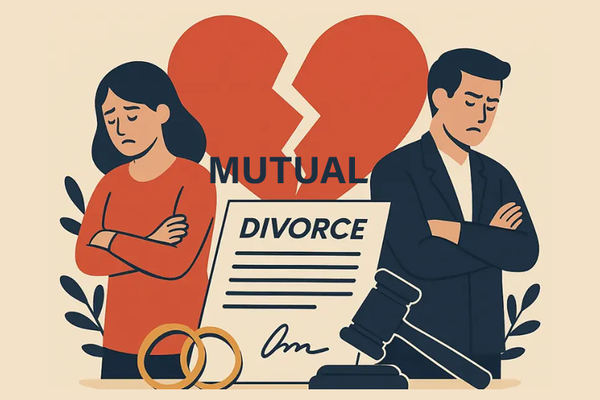
What is Mutual Divorce?
Mutual divorce means dissolution of marriage by agreement between husband and wife. Both parties jointly decide that they can no longer live together and mutually agree to separate legally.
Under Indian law, mutual divorce is available under:
• Hindu Marriage Act, 1955
• Special Marriage Act, 1954
• Other personal laws applicable to different religions
Basic Conditions for Mutual Divorce
Generally, the following conditions are required:
• Husband and wife have been living separately for at least one year
• Both parties mutually agree that marriage cannot continue
• Consent of both parties is free and voluntary
Important Issues Decided in Mutual Divorce
Before filing the petition, both parties usually settle important matters such as:
• Child custody
• Visitation rights
• Permanent alimony or maintenance
• Division of property and assets
• Return of jewelry or articles
• Withdrawal of pending cases, if any
A proper settlement helps avoid future disputes.
Procedure for Mutual Divorce in India
Filing of Joint Petition
Both parties jointly file a divorce petition before the Family Court having jurisdiction.
The petition generally contains:
• Details of marriage
• Period of separation
• Reasons for divorce
• Settlement terms
First Motion Statement
The court records statements of both parties to confirm that consent is voluntary.
Cooling-Off Period
After the first motion, the court generally grants a cooling-off period intended to provide an opportunity for reconciliation.
However, in certain circumstances, courts may waive this period depending upon facts of the case.
Second Motion
After completion or waiver of the cooling-off period, both parties again appear before the court to confirm their decision.
Divorce Decree
If the court is satisfied that consent is genuine and settlement is fair, a decree of divorce is granted.
Documents Generally Required
Common documents include:
• Marriage certificate
• Identity proofs
• Address proofs
• Passport-size photographs
• Settlement agreement
• Proof of separation, if available
Additional documents may vary according to facts of the case.
Advantages of Mutual Divorce
Faster Resolution
Mutual divorce is usually quicker than contested divorce litigation.
Less Mental Stress
It reduces emotional pressure and public conflict between parties.
Privacy and Dignity
Parties can settle issues respectfully without prolonged allegations.
Cost Effective
It generally involves lower litigation expenses compared to lengthy contested proceedings.
Child Custody in Mutual Divorce
Courts primarily consider the welfare and best interests of the child. Parents may mutually decide:
• Physical custody
• Joint custody
• Visitation schedule
• Educational expenses
The court reviews the arrangement before approval.
Can Consent Be Withdrawn?
Yes. Either party may withdraw consent before the final decree. In such situations, mutual divorce proceedings may not continue.
Importance of Legal Advice
Even in mutual divorce matters, proper legal guidance is important to:
• Draft settlement terms carefully
• Protect legal rights
• Avoid future disputes
• Ensure lawful procedure
Conclusion
Mutual divorce provides a peaceful legal solution for couples who mutually decide to end their marriage respectfully. Proper settlement, cooperation, and legal guidance help ensure smooth completion of the process.
Every matrimonial matter is unique, and professional legal advice can help parties understand their rights and obligations according to law.